Securing a professional pest control service in Savannah halts active structural damage and eliminates nesting populations driven inside by high coastal Georgia humidity. Historic brick foundations, unvented crawl spaces, and mature maritime oaks create distinct pest pressure throughout Chatham County.
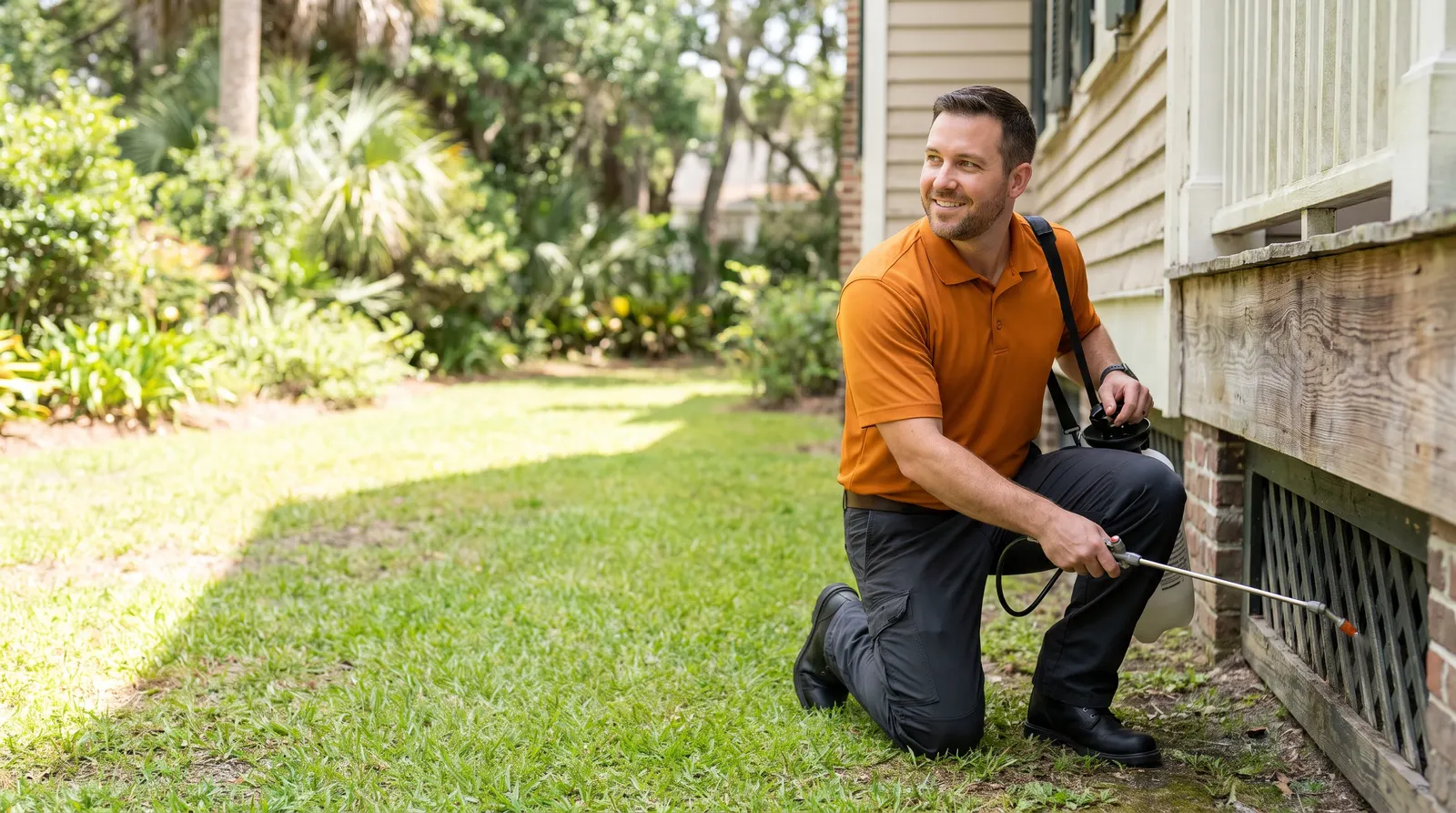
A pest control service in Savannah is an on-site structural remediation process that identifies, suppresses, and forms chemical or physical barriers against wood-destroying insects, perimeter invaders, and disease-carrying vermin native to coastal Chatham County ecosystems.
Every service reflects the same meticulous attention to detail, whether it's a single job or a larger pest control service project across Savannah.
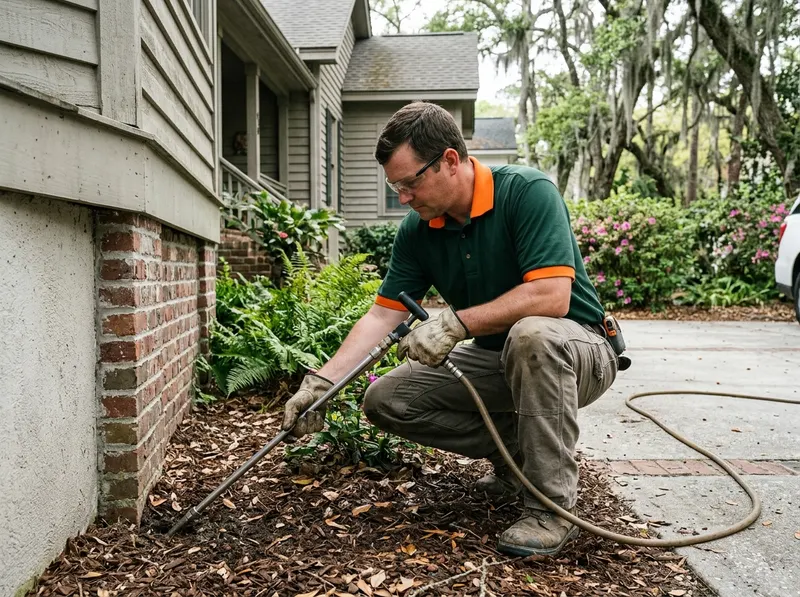
Subterranean termite treatment halts structural destruction caused by eastern subterranean and Formosan termite colonies nesting in Chatham County soil. Remediation involves trenching six inches wide by six inches deep and injecting non-repellent liquid termiticide at four gallons per ten linear feet along exterior continuous footings, piers, and slab expansion joints to form an unbroken chemical barrier. Technicians rod directly into low-lying soil formations beneath porch slabs and unexcavated crawl spaces to bind fipronil molecules to sandy loam particles. Technicians also install in-ground cellulose monitoring stations every ten to twenty feet around the perimeter to detect secondary foraging paths before alates swarm toward interior structural framing. Interior structural treatments involve precision drilling into infected sill plates, band joists, and stud wall voids to inject localized expanding termiticide foam that travels directly through hidden carton nests and mud tubes.
Get a quote →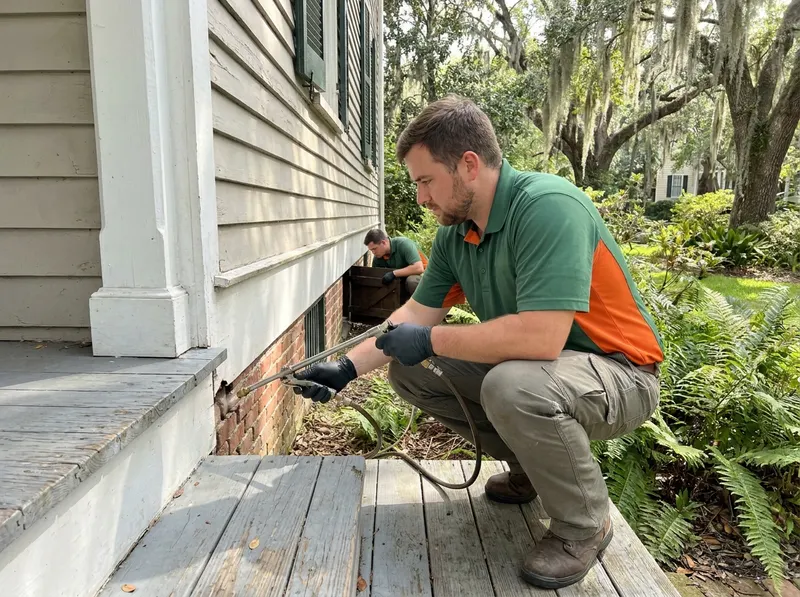
Palmetto bug and German cockroach control eliminates large American cockroaches emerging from Spanish moss and damp mulch, as well as interior German cockroach infestations in kitchen cabinetry. Treatment targets foundation voids, attic eaves, and moisture hubs with microencapsulated pyrethroids and insect growth regulators. Interior cracks receive precision bait placements utilizing indoxacarb or dinotefuran that transfer lethal active ingredients back through communal nesting sites without leaving visible residue or airborne fumes. For exterior perimeters, crews apply a continuous three-foot vertical and five-foot horizontal protective barrier across exterior brick, foundation weep holes, and adjacent landscaped mulch beds to knock down incoming invaders before they contact doorway weatherstripping. Attic soffits and damp crawl space thresholds receive fine silica-based desiccant dust applications that abrade insect cuticles on contact, ensuring structural voids remain completely inhospitable to foraging roach populations over extended sixty to ninety-day suppression cycles.
Get a quote →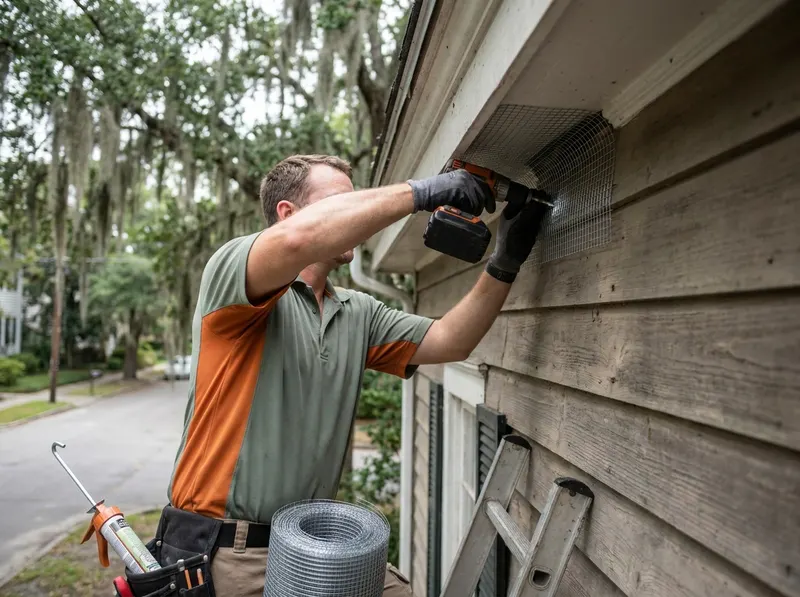
Roof rat and rodent exclusion stops non-native rodents from nesting in blown attic insulation and chew-damaging electrical wiring across historic properties. Technicians seal external entry points larger than one-quarter inch using 16-gauge galvanized steel mesh, copper mesh, and elastomeric sealants along rooflines, soffits, and crawl space access doors. Tree branches overhanging roof eaves within six feet are flagged for physical clear-cutting to eliminate primary aerial highway access. Interior mechanical snap traps and tamper-resistant exterior bait stations eliminate the trapped population within 48 to 72 hours without permitting unmonitored poisons to contaminate living spaces. Technicians conduct exhaustive attic insulation assessments to identify soiled runways, urine-marked framing, and compressed nesting pockets, applying non-toxic sanitizing bio-enzymatic sprays directly over contaminated subflooring to break down rodent pheromone trails that otherwise attract neighboring colonies.
Get a quote →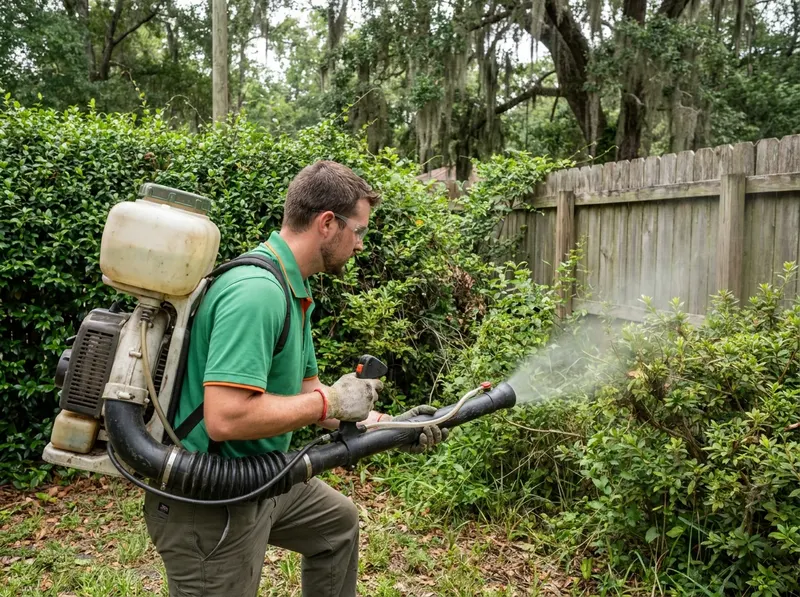
Mosquito suppression reduces biting adult populations and interrupts larvae cycles fueled by standing water in Chatham County's tidal estuaries and shaded residential yards. Crews apply botanical-based adulticides and microencapsulated solutions to the undersides of dense foliage, property perimeters, and drainage ditches using gas-powered mist blowers calibrated to deliver fine twenty-to-thirty-micron droplets. Applications adhere firmly to thick broadleaf plants, live oak shrubs, and ornamental grasses where adult Aedes albopictus and Culex quinquefasciatus mosquitoes harbor during peak daylight hours. Standing water sources receive solid bacterial larvicide briquettes containing Bacillus thuringiensis israelensis to prevent pupation for up to 30 days without impacting non-target wildlife or domestic pets. Service schedules run every twenty-one to twenty-eight days from early spring through autumn, synchronizing directly with peak coastal high tides and tropical storm rainfall patterns to maintain an uninterrupted chemical disruption curtain around outdoor living spaces.
Get a quote →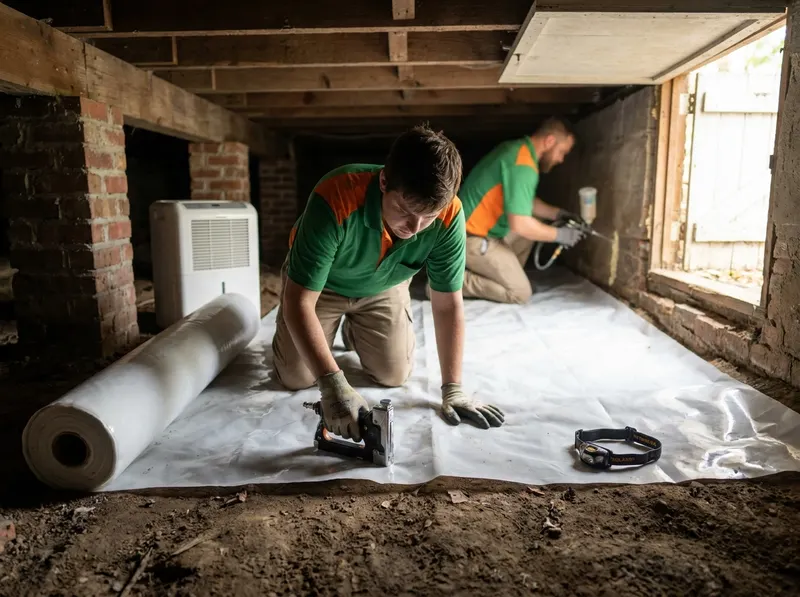
Crawl space encapsulation and moisture remediation stops moisture-dependent pests including subterranean termites, wood-boring beetles, and camel crickets from infesting foundation subfloors. Technicians lay a continuous 12-mil to 20-mil vapor barrier across dirt floors, tape all support pier seams, and seal exterior foundation vents against ambient humidity. Foundation stem walls receive closed-cell spray insulation or reinforced poly liners mechanically fastened with masonry anchors, completely isolating internal structural lumber from subterranean ground evaporation. Installing an energy-efficient commercial crawl space dehumidifier stabilizes relative wood moisture content below 15 percent, eliminating the fungal rot conditions required for powderpost beetles and drywood termites to sustain colony growth. Sump pump assemblies and drainage trench basins are plumbed when low-elevation crawl spaces sit near historic groundwater tables, preventing subsurface pooling and ensuring the foundation perimeter stays dry across extreme coastal precipitation cycles.
Get a quote →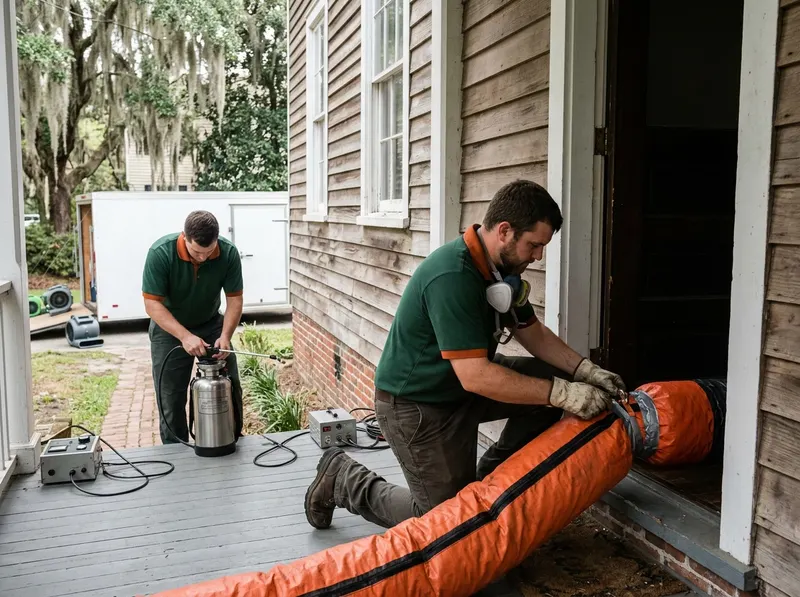
Bed bug eradication eliminates Cimex lectularius populations from mattresses, headboards, baseboards, and wall sockets in residential properties and multi-family units. Service incorporates directed dry steam treatments reaching 180 degrees Fahrenheit to kill heat-sensitive eggs instantly, paired with synthetic pesticide residual dusts in electrical plates and deep structural cracks. Technicians dismantle bed frames, inspect box springs, and pull switch plate covers to treat primary harborage pockets that standard surface sprays miss. Liquid formulations containing dual active ingredients and juvenile hormone mimics break the reproductive life cycle across all five nymphal stages. Full structural clearance includes a 14-day secondary inspection to ensure no unhatched nymphs survived, verifying zero bed bug movement or egg viability across treated sleeping quarters and adjacent living room upholstery before releasing the property for unrestricted occupancy.
Get a quote →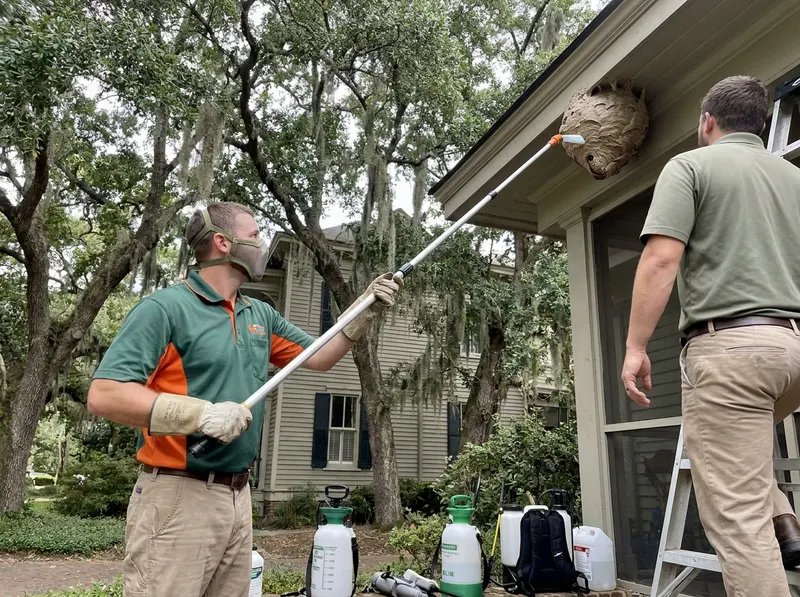
Stinging insect remediation safely neutralizes and removes aerial yellowjacket nests, bald-faced hornet structures, and paper wasp clusters from eaves, porches, and roof valleys. Technicians utilize telescoping applicator poles to inject fast-acting pyrethroid dust formulations directly into entry points, collapsing the defensive colony inside five minutes. Underground ground-nesting yellowjackets inhabiting abandoned rodent burrows or lawn voids receive pressurized liquid flushes and heavy residual dusting to neutralize the subterranean queen and foraging guards. The physical comb or carton nest is scraped down and scraped surfaces receive residual repellents to deter scout queens from rebuilding. Technicians verify complete queen mortality, scrape away structural attachment points to avoid pheromone re-marking, and seal any adjacent wood fascia gaps or soffit louvers that worker hornets routinely exploit to build future nesting sites.
Get a quote →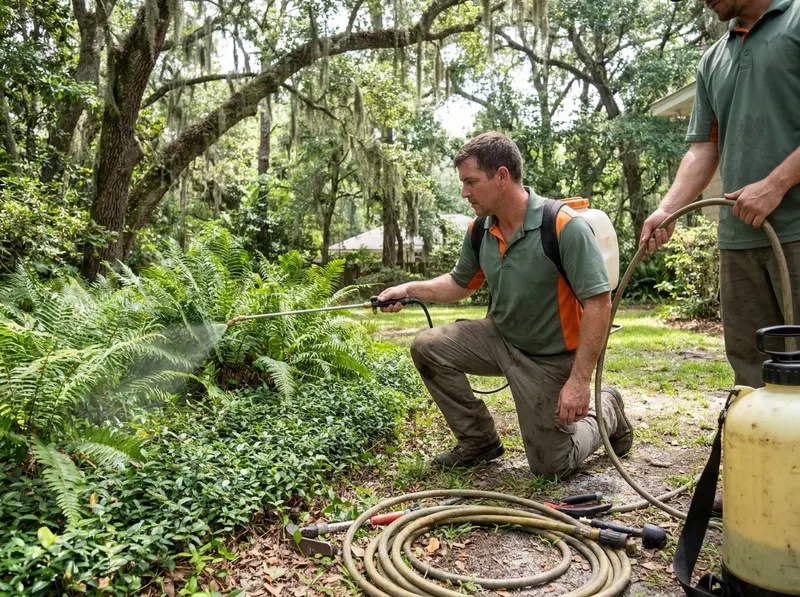
Flea and tick yard treatments break the parasitic lifecycle in outdoor turf, pine straw, and shaded pet resting corridors before insects enter interior living spaces. High-volume hydraulic sprayers distribute broad-spectrum acaricides combined with insect growth regulators that disrupt egg hatching and larval molting stages. Technicians target dense ornamental shrubs, shaded fence lines, under-deck voids, and tall grass margins where black-legged deer ticks, American dog ticks, and cat fleas concentrate awaiting canine and human hosts. The dual-action chemistry binds to organic ground matter, establishing a 30-to-60-day defensive perimeter that tolerates coastal rainfall. Interior treatments accompany exterior operations when active infestations spread inside, applying microfine carpet sprays and targeted crack-and-crevice treatments along baseboards to neutralize flea pupae buried deep within structural carpet fibers and hardwood flooring gaps.
Get a quote →You get a firm, itemized quote for your pest control service before any work begins, no surprises, no pressure.
Careful prep, tidy work, and a full cleanup when we are done. We treat your home and belongings like our own.
The same trusted, background-checked team from the first call to the final check.
If dealing with damp crawl spaces or historic timber framing, select liquid non-repellent termiticide barrier injection over bait stations alone; liquid barriers bond directly to low-lying coastal soils and halt wood consumption immediately, whereas bait monitoring systems require four to twelve weeks for colony elimination. If facing a sudden indoor roach sighting, choose targeted perimeter microencapsulated spray and gel baiting rather than total room fogging; gel baits eliminate the nest harborages hidden within historic lath-and-plaster wall voids without aerosolizing chemicals into living quarters. When addressing rodent activity in multi-story residential properties, select full architectural exclusion using galvanized steel hardware cloth over interior rodenticide baiting; physical exclusion permanently shuts structural entry points along the roofline, whereas chemical rodenticides run the acute risk of rodents dying inside inaccessible wall cavities and producing severe secondary odor and fly issues.
If managing high seasonal flea or tick pressure in yards with pets, combine exterior broadcast insect growth regulators with liquid adulticides rather than relying solely on interior pet topical treatments; dual exterior chemistry neutralizes the environmental reservoir in pine straw beds before breeding cycles spill indoors. The operational trade-off centers on upfront physical exclusion work versus ongoing suppressive chemical treatments: sealing foundation vents, pipe penetrations, and fascia gaps requires higher labor at the initial visit but reduces long-term reliance on monthly liquid pesticide reapplications.
Every project gets a firm, written price after a free on-site visit. Ranges below for orientation.
Tell us about your pest control service job and we'll send a clear, written quote, usually the same day. Or just call and talk to a real Savannah pro.
(912) 724-7463
Savannah's high annual precipitation, sandy loam soil, and dense maritime forest canopy around landmarks like Forsyth Park, Wormsloe State Historic Site, and Bonaventure Cemetery generate severe subterranean termite pressure. Historic properties in the Victorian District and Ardsley Park feature heart-pine framing and damp crawl spaces that draw Formosan termites and American cockroaches out of live oak canopies. In marsh-bordering communities like Isle of Hope and Skidaway Island, year-round humidity keeps pest activity elevated even during winter months, requiring non-repellent chemical treatments calibrated for Chatham County's shallow water tables. Architectural details unique to Savannah, such as ballast stone foundations, unvented brick pier crawl spaces, and decorative wooden porticos along Bull Street and Abercorn Street, present distinct subterranean entry highways that require specialized mechanical injection rods rather than standard surface spraying. Furthermore, tidal fluctuations along the Wilmington River and Herb River push water tables within inches of home foundations during seasonal king tides, driving subterranean termites and Argentine ants upward into dry structural framing. Managing these severe pest patterns requires localized chemical chemistry that binds permanently to damp soil without leaching into nearby brackish salt marshes, protecting coastal ecology while eliminating structural pest harborages.
Free estimates for Savannah & the surrounding area.
 Calviro Pest Control